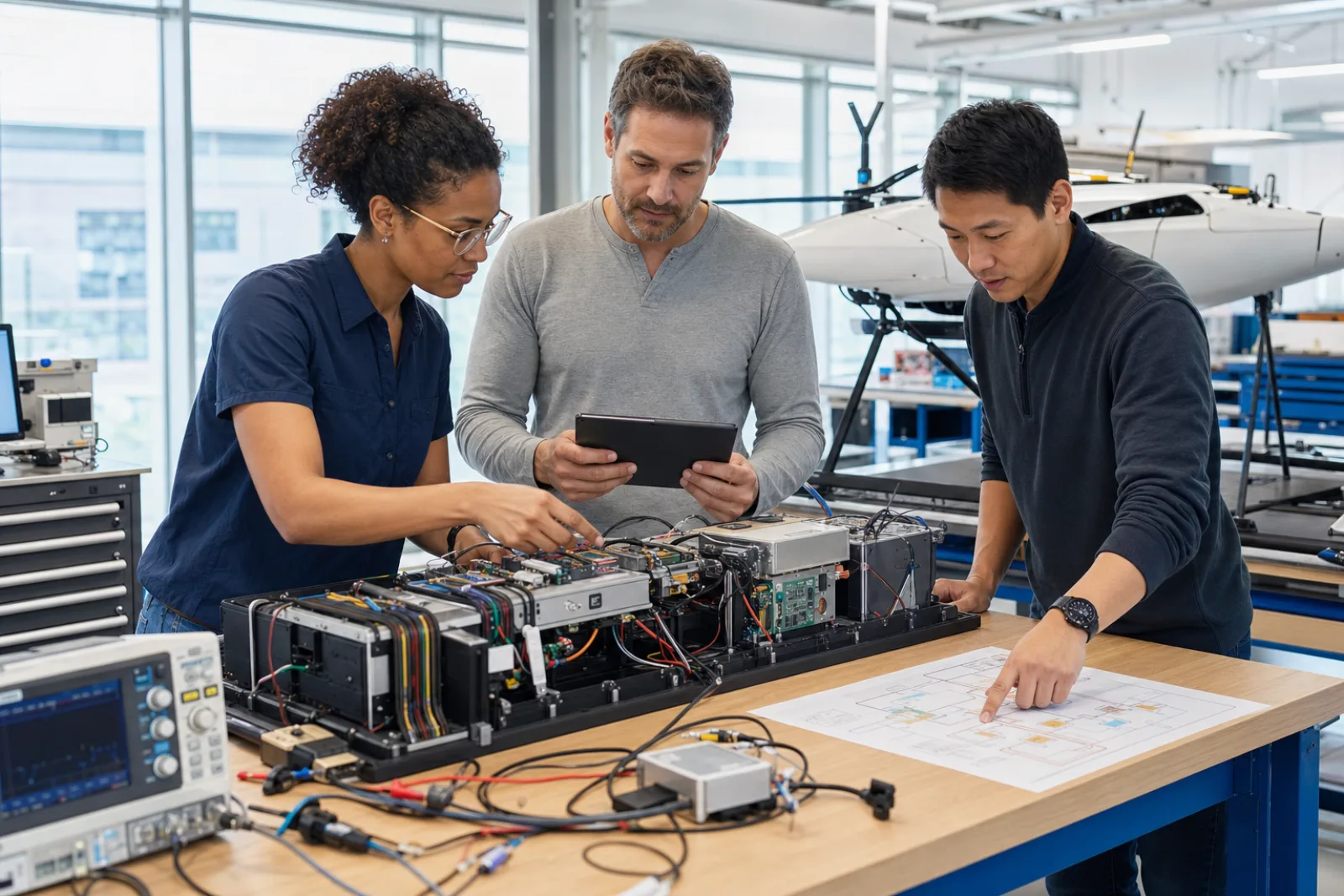
01Systems Architecture
Systems architecture involves the conceptual design and high-level structure of complex systems. It defines the system components, their interactions, and the technologies employed. A well-designed architecture ensures that the system can efficiently process and analyze large volumes of data, support interoperability among various subsystems, and adapt to evolving operational needs. This holistic approach ensures seamless data flow and operational coordination, enhancing the overall effectiveness of operations.
02Systems Integration
Systems integration is the process of bringing together various subsystems and components into a cohesive and functional whole. This involves integrating hardware, communication systems, data processing platforms, and analytical tools to ensure seamless interoperability and real-time data sharing. Effective systems integration enables organizations to leverage advanced technologies and optimize performance.
03Operations & Maintenance
Operations and Maintenance (O&M) are critical to ensuring the continuous functionality and reliability of systems and infrastructure. This discipline encompasses the day-to-day management, monitoring, and upkeep of assets and systems. Effective O&M practices ensure that all components operate efficiently, with minimal downtime, and can quickly adapt to operational demands and environmental changes.